
CFO Job-Hopping: How Much Is Too Much?
Whilst government recruiter David Arnold and the CEO of a large-profile Silicon Valley corporation ended up speaking about the company’s CFO search, the CEO advised Arnold, “If you ship me someone who has had a good deal of limited stops, I’ll be skeptical.” That was a purple flag and her “number one pet peeve,” says Arnold, president of Arnold Associates, LLC.
As well limited a tenure at far too numerous organizations — position-hopping — delivers job pitfalls like the concern cited by Arnold’s shopper. But how do you define how significantly is far too significantly movement? And are the downsides major?
The answer on how significantly is far too significantly is subjective and can fluctuate from sector to sector. Organizational consulting business Korn Ferry reports the common CFO tenure is four.7 years, even though the most new Crist|Kolder Associates Volatility Report sets it slightly better, at four.86 years. According to the Korn Ferry evaluation, the facts technological know-how sector has the shortest CFO tenure at four.1 years, even though the industrial phase has the longest, at five.
So is any tenure shorter than that position-hopping? Drew Keith, government vice president and CFO of Dallas-centered Texas Security Bank, sees 3 years as the minimum amount to stay in a position if the CFO is in the middle of their job. For someone having just moved up to a CFO job, the minimum amount could possibly be lengthier, four to five years.
Nevertheless, consulting business Korn Ferry’s Jeff Constable, senior shopper companion and co-direct of the world fiscal officers’ follow, cautions in opposition to preconceived notions about far too significantly or far too little position movement.
“I attempt hard to dispel the idea that there’s some type of great variety of moves,” he suggests.
Compared with length of time, having been in a critical posture long plenty of to encounter an complete business enterprise cycle could possibly be additional vital, suggests CFO Keith. “I appear at a distinct sector, its critical funds elements, and its cycle. Have you been by means of the full funds cycle for the business enterprise relative to that sector?” he asks. That can give a selecting CEO and board of directors assurance.
 Not all business enterprise cycles are of the exact length, of class. The business enterprise cycles in technological know-how are ordinarily more quickly than in other industries. “It’s the pace of modify and the [merger and acquisition] action,” suggests Constable. “Plus, non-public providers are heading public by means of [exclusive reason acquisition providers] or IPOs or getting offered.” All of people circumstances direct to additional corporation movement amid CFOs and prompt organizations to change CFOs.
Constable suggests that possession modify from that type of action is one of the two most important elements driving CFO departures in any sector or product category. A new CEO is the other. And, if there’s heading to be a CFO modify when a new CEO normally takes more than, it occurs most typically in the very first 6 to eight months.
Possession modify performed a job in Katherine Edenbach’s encounter previously in her job. Following performing in a array of finance environments at a large semiconductor corporation for additional than a 10 years, she accepted a CFO posture at a distinctive corporation that was acquired quickly after. She put in only two-and-a-fifty percent years in that job prior to leaving, but it was for fantastic good reasons.
“I took them by means of an acquisition and achieved what I preferred to. It was time to move on and start off more than with an additional corporation,” suggests Edenbach, who is now CFO of fintech Emburse.
These situations describe why Constable and some others say it is essential to appear for the story at the rear of any purple flags or thoughts all-around the length of stay. Perhaps the government made a geographic move for individual good reasons, or there wasn’t room for growth. The latter is one that Constable expects to see additional of as providers operate to recruit historically underrepresented talent into the C-suite.
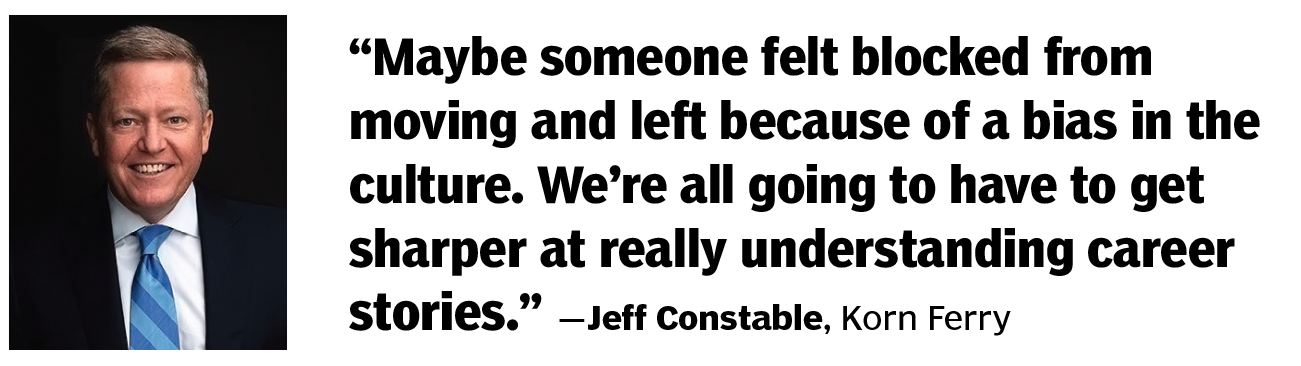
“Maybe someone felt blocked from going and left because of a bias in the lifestyle. We’re all heading to have to carry on to get sharper at actually understanding job tales,” he suggests.
The Dangers
But, even when CFOs and recruiters are unwilling to define what is deemed position-hopping, they agree that far too significantly movement in between providers comes with tangible and intangible pitfalls.
Two of the most important, according to employment methods and litigation lawyer Lauren Paxton, are “job trajectory impairment” and long-phrase compensation loss. Paxton, a companion at New York-centered Calcagni & Kanfesky LLP, suggests CFOs typically have put up-employment restrictive covenants these as non-competitors clauses.
“A CFO who hops from one position to an additional may well obtain their trajectory impaired by durations out of the sector,” she suggests.
 In addition, most CFO compensation deals contain limited-phrase and long-phrase compensation. That lengthier-phrase fork out, ordinarily limited inventory units and incentive inventory solutions, could possibly get 3 to five years or lengthier to vest.
“CFOs will commonly forfeit the unvested and limited portions of their long-phrase compensation when they resign. As a end result, the loss of significant incentive compensation should be weighed in opposition to the elevated limited-phrase compensation a new position may well provide,” Paxton suggests.
Other pitfalls are considerably less tangible. Important amid them are the worries lifted about a CFO candidate’s judgment. Men and women realize when a finance main leaves a management job rapidly when — or even two times — because the corporation wasn’t a fantastic in shape. But when it goes outside of that threshold and just cannot be explained by mitigating elements that contain getting promoted, subsequent a mentor, or going to an additional geographic region for individual good reasons, it is “a lethal flaw,” suggests recruiter Arnold.
“What type of judgment is this individual exercising? Are they creating fantastic decisions? This is important because the CFO is a critical adviser to the CEO and board of directors,” he suggests.
Because CEOs and boards also want CFOs with the formative encounter of having been part of a critical venture or initiative from starting to close, position-hoppers who just cannot show that have constrained job growth options, Arnold adds. “Even if they weren’t the CFO, we appear for candidates who had a outstanding job serving to a corporation go from X to Y.”
Not More than enough Time
There is also the draw back that position-hopping does not enable a finance leader to stay with a corporation long plenty of to become immersed in strategies that aid establish strategic considering skills.
“It’s hard to become strategic if you hold going from one corporation to an additional. You really do not get to understand what drives the corporation or become a companion to the functions side of the business enterprise,” suggests Emburse’s Edenbach.
One particular CFO cautions in opposition to viewing new far too-short tenures far too harshly, nevertheless. Citing the February/March 2021 CFO article “10 Important Roles for CFOs” and the business enterprise pressures connected with the COVID-19 pandemic, David Neaves, CFO of Lendmark Financial Products and services, suggests some of his friends are going through burnout. The CFO job necessitates additional skills than it did a 10 years back, he notes, and even though exciting, it can also be exhausting.
“Business has become additional closely reliant on technological know-how, and it is altering additional rapidly. I really do not have to be an qualified in all elements of a company’s technological know-how, but I do have to realize the core technological know-how,” Neaves suggests, adding, “That learning is one additional part of your working day for which you have to obtain the time.” Toss in the crisis administration joined to the world pandemic, and it is not strange to see friends leaving their C-suite positions to recharge, take a look at, and re-focus, he suggests.
Just really do not do far too significantly of that, cautions Korn Ferry’s Constable.
“There are people today in final decision-creating capacities — board associates and CEOs — who can have a little bit of an allergic response to far too significantly movement,” he suggests. “No subject how properly explained the transitions are, they may well not want to hear about it.”
Sandra Beckwith is a freelance business author.


